
Article
24/7 Monitoring Explained: How Escalation Workflows Reduce Risk
Professional 24/7 alarm monitoring Montreal teams rely on only reduces risk when every alert has a clear next step. Here is how escalation workflows protect Montreal properties after hours across Downtown, the Plateau, Ahuntsic, and Saint-Laurent corridors.
Quick Summary
- 24/7 alarm monitoring in Montreal works best when each alert has a named contact path and a clear escalation order for your building.
- Video verification and written call trees cut wasted dispatches and speed real response for offices, retail, and multi-unit sites across Montreal.
- After-hours coverage matters most when properties sit empty overnight in Downtown, Plateau, Ahuntsic, and industrial Saint-Laurent corridors.
Why trust this article
Written by: Pro Vision Security Team (Montreal Security Specialists)
Reviewed by: Pro Vision Security Technical Team (Local Technical Review)
Updated on:
24/7 alarm monitoring montreal: the short answer
For 24/7 alarm monitoring montreal, the right solution connects your property's real risks, your building's quirks, and a clear plan for what happens when something goes wrong. In Montreal, an on-site visit confirms coverage, cabling, who gets access to what, and the support you'll get, before the final price is set.
There is no single perfect number of devices that works for everyone. A smaller but more complex property can need more planning than a large open space. Compare quotes based on real results and total cost, not just the starting price.
What does 24/7 monitoring actually do?
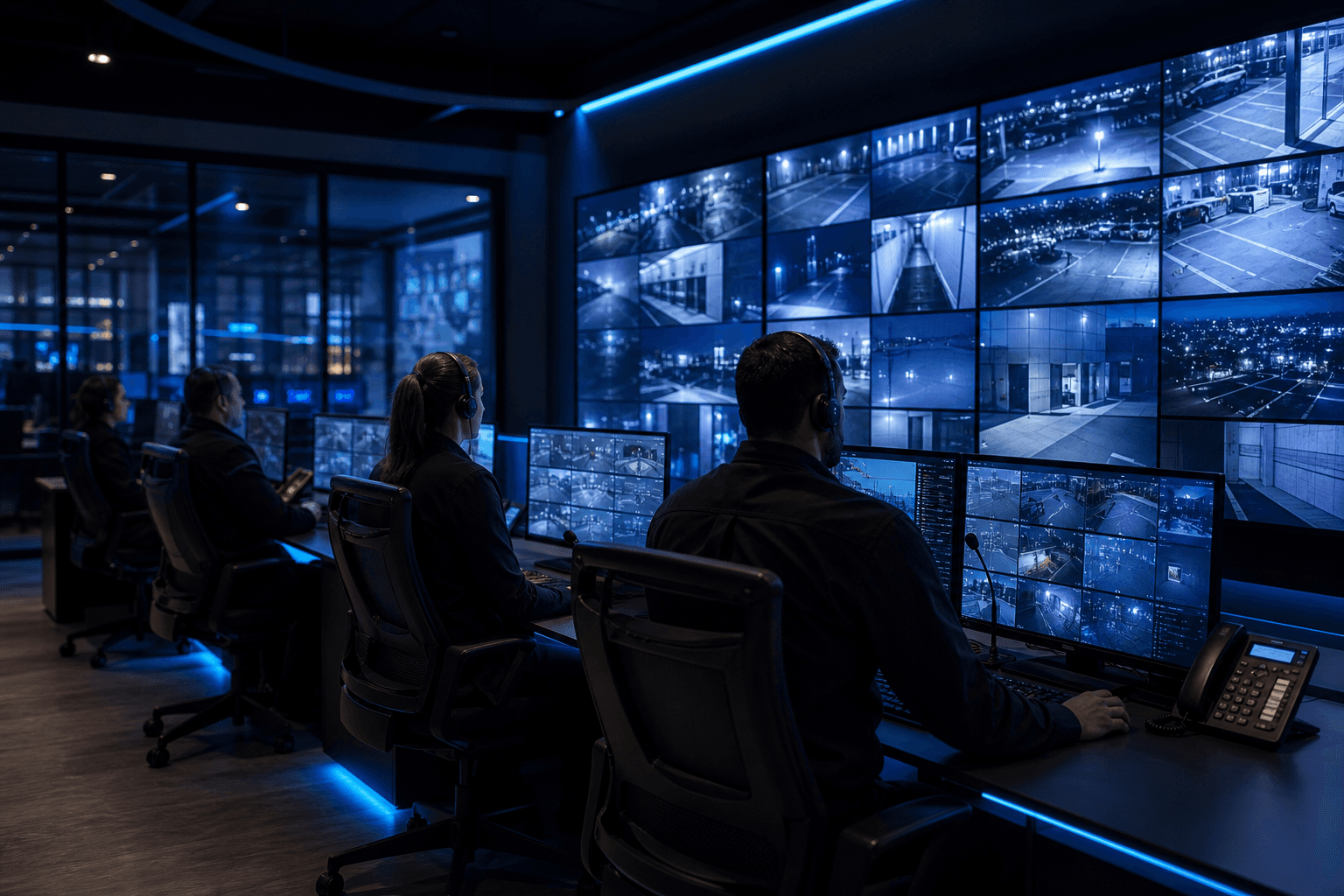
24/7 alarm monitoring means trained operators receive your system alerts around the clock and follow an agreed response plan—not just another phone notification.
When a sensor trips, a door stays open, or an alarm panel loses power, the monitoring team can verify the event, call your contacts in order, and escalate when needed. That is the difference between a push alert sitting unread and a documented action path.
For Montreal properties, that matters most at night, on weekends, and during holidays when no one is on site. Offices emptying after the evening rush, storefronts on busy Plateau streets, and light industrial spaces near Saint-Laurent transit corridors all share the same gap: the building is quiet while risk continues.
You can explore how this service is structured on /en/services/monitoring-24-7, and pair it with the response-design ideas in /en/blog/monitoring-response-workflows-designed-first so monitoring and daily routines stay aligned.
Why do escalation workflows reduce risk?
Escalation workflows reduce risk by defining who gets contacted first, what counts as a real emergency, and when to involve police or keyholders.
Without that plan, operators may call the wrong person, wait too long, or treat every alert the same. With a workflow, they follow your property rules instead of guessing under time pressure.
A typical flow starts with signal receipt, then verification when video or audio is available, then contact attempts in priority order, then escalation if no one answers. Documenting that path is what turns monitoring into protection rather than noise.
Montreal commuting patterns add another reason to write it down: managers may be on the Métro, stuck on the Décarie or Métropolitaine, or already offline after a long shift. A named backup contact and a time limit before escalation keep the process moving when the first phone goes unanswered.
What should your Montreal call tree include?
Your call tree should list primary and backup contacts, preferred phone numbers, and what each person is authorized to decide.
Include opening and closing hours, false-alarm codes if you use them, and notes for special situations like after-hours deliveries, cleaning crews, or snow-day schedule changes. Keep the list short enough to act on quickly—usually two to four reliable people.
Businesses across Montreal often rotate managers between Downtown, Ahuntsic, and Saint-Laurent sites. Update the tree whenever roles change so monitoring never depends on an outdated mobile number or a former employee still listed first.
For a broader look at how alarms, cameras, and doors fail together when contacts are unclear, see /en/blog/security-stack-weak-points-incident-prevention.
How does video verification fit into monitoring?
Video verification lets operators review linked camera clips before escalating, which reduces false dispatches and speeds real incidents.
When a motion or door alarm triggers, related footage can show whether a person is present, a door is ajar, or wind, snow, or passing headlights caused the signal. That context helps operators choose the right next step instead of treating every zone trip as identical.
Pairing monitoring with cameras is especially useful for warehouses, storefronts, and multi-unit buildings where after-hours activity can look ambiguous without visuals. If you are still planning camera coverage, /en/blog/security-camera-installation-montreal and /en/blog/security-cameras-montreal-guide outline practical placement questions.
Analytics that cut nuisance motion also help monitoring teams; our companion article on smart video analytics explains how cleaner alerts support faster verification.
Which Montreal properties benefit most from professional monitoring?
Properties that sit empty overnight, hold inventory, or have multiple entrances benefit most from professional 24/7 alarm monitoring in Montreal.
Retail shops, clinics, offices, light industrial sites, and residential buildings across Downtown, the Plateau, Ahuntsic, and Saint-Laurent all share the same need: someone must act when staff are not present. Shared entrances and rear lanes common in older Montreal blocks make clear zone labels especially important.
If your team already gets phone alerts but cannot always answer—evening events, travel, or simply sleep—monitoring adds a backup layer that follows your rules instead of leaving the alert unhandled until morning.
How do Quebec seasons and schedules change monitoring needs?
Cold snaps, snowstorms, and long holiday weekends change both false-alarm patterns and how quickly keyholders can reach a site.
Outdoor sensors and doors can behave differently in deep cold or heavy snow. A workflow that allows brief verification before dispatch helps teams avoid unnecessary callouts while still escalating when a door is truly compromised.
Holiday closures common across Greater Montreal should be written into the monitoring notes: who is away, who remains on call, and whether temporary contractors will be on site. Those details prevent confusion during the periods when buildings are emptiest.
How do you measure whether monitoring is working?
Measure confirmation speed, false-alarm rate, missed contacts, and how often incidents are closed with a clear outcome.
Ask for periodic reports that show which zones trigger most often and whether contacts answered on the first try. Those numbers reveal process problems—outdated phones, vague zone names, busy sidewalks facing a door sensor—not just hardware issues.
A short quarterly review of contacts, schedules, and camera coverage keeps the workflow aligned with how your Montreal property actually operates. Visit our Saint-Laurent office on Google Maps at https://www.google.com/maps/search/?api=1&query=5929%20Trans%20Canada%20Route%2C%20Suite%20240%2C%20Saint-Laurent%2C%20Quebec%20H4T%201Z6 when you want to walk through reports and escalation options in person.
What should you prepare before monitoring goes live?
Before monitoring goes live, confirm zone labels, contact order, passcodes, and what events require immediate escalation.
Walk through a test alarm with your installer so you see the full path from signal to call. Fix confusing zone names and outdated phone numbers at this stage, not after the first real overnight event.
Also decide how holidays and temporary closures are handled, and keep a simple written note for the monitoring team. For alarm hardware context that supports monitoring, see /en/blog/alarm-system-installation-montreal and /en/blog/alarm-system-montreal-guide.
What should Montreal weather and buildings mean for your plan?
A security project in Montreal has to deal with more than just the size of your property. Freezing winters, snow, road salt, humid summers, and big temperature swings can affect outdoor cameras, cables, door hardware, and Wi-Fi reliability. Equipment that works fine in a sheltered lobby downtown may not hold up on an exposed loading dock in Saint-Laurent or an outdoor entrance in Laval.
The type of building matters too. Older homes and buildings in areas like Notre-Dame-de-Grace or Villeray can have finished brick or stone walls and limited paths for cables. Warehouses near the Trans-Canada highway often need longer cable runs and a clear plan for who responds after hours. A good assessment looks at all of this before any equipment is quoted.
How does Pro Vision Security look at your property?
We start by asking what you actually need: recognize a face, confirm an alarm, control who can open a door, or quickly find a past event. Then we walk your property, check lighting and foot traffic, note any areas that need privacy, confirm your internet and power, and figure out who should be contacted during and after business hours.
You should end up with a clear, written plan that connects every camera, sensor, and door to a reason. It should cover coverage areas, who can access what, how long footage is kept, how you get notified, training, and room to grow later. This avoids a common mistake: buying equipment first and only later figuring out how it should actually be used day to day.
What should you ask before comparing quotes?
Ask each company what is included in the price, what could make the price change, and how their plan handles your biggest concern. Confirm whether cabling, permits (where needed), setup, training, activating monitoring, warranties, and support afterward are included. A low price on equipment can hide bigger costs later for setup and service.
Also ask how you will find footage, add or remove someone's access, test your alarms, and get help outside business hours. Ask for a demonstration using a real example from your property. A good provider should be able to explain, in plain language, exactly what happens when something goes wrong, and how easy the system will be to manage as your needs change.
How should privacy and cybersecurity be handled in Quebec?
Your security system can include video of people, records of who came and went, names, phone numbers, and notes about past incidents. As a Quebec home or business owner, you should know why each piece of information is collected, who can see it, how long it is kept, and what happens if there is a request or an incident. Cameras should avoid pointing at private areas that do not need to be covered.
Use separate logins for each person, extra login protection where available, remove access right away when someone leaves, and make sure remote access is secure. This matters most for apps and cloud dashboards you can check from your phone. Rules around privacy and insurance can vary, so it is worth checking with a qualified advisor rather than assuming the equipment settings alone are enough.
What happens during installation and hand-off?
A proper installation includes testing, not just mounting cameras and running wires. The team should check camera views and sensors both day and night, confirm the time stamps on events, test a priority alert, confirm your contact list is correct, and make sure everyone who needs access can actually use the system. Anything that does not work as expected should be fixed before the job is considered done.
You should also get simple training, basic documentation, warranty details, and an easy testing schedule. You need to know how to add or remove a user, find a past event, report a problem, and reach support. A quick check-in after the first few weeks helps fix any annoying false alarms or gaps that only show up once you are actually using the system.
How do you keep your system working well over time?
Review your system after renovations, staff changes, new hours, repeated false alarms, or anything that showed a gap in your coverage. At least twice a year, check that your devices are working, your cameras are clean, your doors close properly, your contact list is current, and you can still easily find footage. Outdoor equipment deserves extra attention after a Montreal winter.
Pay attention to what actually matters, not just the number of devices you have. Useful things to track include how long it takes to confirm an alert, how often you get false alarms, failed attempts to get in, and how long it takes to find footage. These tell you whether your system is really helping you make faster, safer decisions.
Frequently asked questions
Is 24/7 monitoring the same as a camera app on my phone?
No. A camera app notifies you, but professional 24/7 alarm monitoring in Montreal adds trained operators who follow your escalation plan even when you cannot answer.
Do I still need monitoring if I get push alerts?
Push alerts help when you are available. Monitoring covers nights, travel, Métro delays, and busy periods when alerts would otherwise sit unanswered.
How many contacts should be on my Montreal call list?
Most properties work well with two to four reliable contacts in priority order, plus a clear rule for when to escalate further.
Can monitoring work with my existing alarm panel?
Often yes. Many panels can be connected or upgraded for professional monitoring. An on-site review confirms what your hardware supports.
Will monitoring reduce false alarms?
It can, especially when paired with verification steps and well-tuned sensors. The workflow also helps operators treat nuisance alerts differently from real threats.
What happens if no one on my call tree answers?
Your written escalation plan should say what to do next, such as dispatching a keyholder service or contacting emergency services when criteria are met.
Does Pro Vision Security monitor from Saint-Laurent?
Pro Vision Security is based in Saint-Laurent and supports Montreal properties with monitoring plans tailored to each site’s hours, contacts, and camera links.
Should multi-unit and mixed-use buildings use the same workflow as a single storefront?
The principles are the same, but multi-unit sites usually need clearer zone names, landlord notes, and backup contacts because more people share entrances and schedules.
Which areas do you serve around Montreal?
Pro Vision Security serves Montreal, Saint-Laurent, Laval, the West Island, and nearby communities, depending on the project.
When is an on-site visit worth it?
A visit is worthwhile whenever your cabling, lighting, doors, internet, or daily routine could change the design or the price.
Conclusion and next step
If you want 24/7 alarm monitoring Montreal operators can execute without guessing, start with a clear escalation plan for your Montreal property—whether Downtown, Plateau, Ahuntsic, or near our Saint-Laurent base. Contact Pro Vision Security for a quote and a walkthrough of how our monitoring-24-7 service would handle alerts at your site.